Just diagnosed
All 12 articles, newest first.
The Autonomic Nervous System & Dysautonomia: A Complete Guide Your autonomic nervous system runs everything you never think about: heart rate, blood pressure, digestion, temperature. When it stops regulating properly, that's dysautonomia. Here is how it works, what goes wrong, and why it's measurable. How POTS Is Diagnosed: The 30-BPM Rule, the Tilt Table & What to Expect POTS is diagnosed by a sustained heart-rate rise on standing without a big blood-pressure drop, symptoms lasting months, and other causes ruled out. Here is what the criteria mean and what the tests feel like. POTS Subtypes Explained: Hyperadrenergic, Neuropathic, and Hypovolemic POTS is usually grouped into three overlapping patterns: neuropathic, hyperadrenergic, and hypovolemic. Here is what each one means, how they differ, and what your at-home stand-test numbers can hint about which pattern is driving your symptoms. Tilt Table Test: What to Expect and How It Diagnoses POTS and Syncope A tilt table test tips you upright on a motorized table while your heart rate and blood pressure are watched continuously. Here is what actually happens during the test, how it is read, and how it differs from the stand test you can run at home. Autonomic Function Tests: What to Expect at Autonomic Testing Referred for autonomic testing and not sure what happens? Here is a plain walk through the standard autonomic reflex screen: the deep breathing test, the Valsalva maneuver, the tilt table, and the QSART sweat test, plus how each result is read. POTS Treatment: Salt, Fluids, Compression & Medication Explained POTS treatment usually starts with volume, compression and a careful exercise ramp, and adds medication when those aren't enough. Here's how each piece works and why it's almost always a combination. Pacing 101: How to Find and Expand Your Energy Envelope Pacing is the single most important recovery skill for POTS, long COVID and ME/CFS. Here is how to find the edge of your energy envelope, stop the boom-and-bust cycle, and expand your capacity without triggering a crash. HRV: The Complete Guide to Reading Your Nervous System Heart rate variability is the single clearest at-home window into your autonomic nervous system. This is the complete guide: what RMSSD, SDNN, HF and LF actually mean, what moves them, how to measure well, and how to read the trend without spiraling. POTS, Long COVID & MCAS: Why They Travel Together POTS, long COVID, ME/CFS and MCAS overlap so much that many people are told they have several at once. Here's what actually connects them, how they differ, and which parts of each you can track at home. Recovery from Post-Viral Dysautonomia: Turning Data Into Decisions Recovery from POTS and post-viral dysautonomia is slow, noisy and non-linear, which is exactly why it's so easy to lose hope in the day-to-day. Here's how to pace, read your trends, and turn months of scattered data into decisions that actually bend the curve. What Recovery Actually Looks Like: The Non-Linear Curve Recovery from post-viral dysautonomia and POTS is real but slow, and it almost never moves in a straight line. Here is what the honest timeline looks like, why plateaus mislead you, and what to watch instead of the daily noise. Turn Months of Data Into a Five-Minute Doctor Conversation Appointments are short and symptoms are hard to describe from memory. Here is how to use your own tracked data to walk in with a clear, specific summary your clinician can act on.
Autonomic · free app
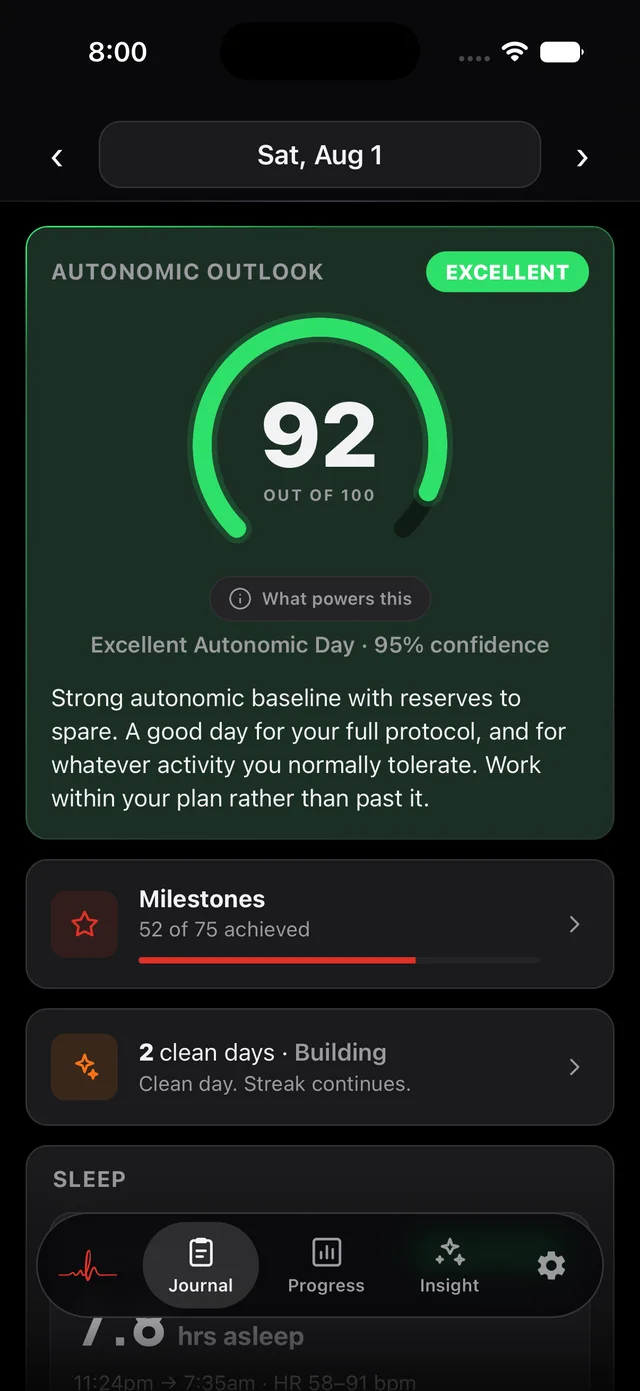
Know what kind of day it is before you get out of bed.
Take a quick heart reading each morning and Autonomic gives you a score out of 100, plus a plain note on how much your body can handle today. So you can plan around a bad day instead of finding out halfway through it.