Dysautonomia
When the autonomic nervous system misfires: heart rate, blood pressure, digestion, temperature and sleep, and how to read what your body is doing.
What dysautonomia actually is
Dysautonomia is the umbrella term for when the autonomic nervous system stops doing its job well. That system runs everything you never have to think about: heart rate, blood pressure, digestion, temperature and sweating. It has two halves, one that speeds things up for action and one that slows them down for rest, and they are meant to balance each other all day long.
When that balance breaks, symptoms can land almost anywhere in the body, which is why dysautonomia so often looks like a dozen unrelated problems. POTS is the best known form. Others include orthostatic hypotension and fainting (vasovagal syncope), and it is common after viral illness, including long COVID.
You cannot feel the regulation itself, so it helps to measure its fingerprints: your heart rate when you stand, your HRV in the morning, your blood pressure through the day. Those turn a vague sense of being unwell into something you and a doctor can work with.
New to dysautonomia? Read these 5 first.
In this order, they take you from how the system works to how to measure it yourself.
About 38 minutes total
- 01 The Autonomic Nervous System & Dysautonomia: A Complete GuideThe whole system, in plain language. · 6 min
- 02 Nervous System Dysregulation: Signs, Causes, and How to Track RecoveryThe signs, and how recovery is tracked. · 12 min
- 03 The Orthostatic Stand Test: How to Do It at Home (and What the Numbers Mean)The simplest test you can do yourself. · 3 min
- 04 Autonomic Function Tests: What to Expect at Autonomic TestingWhat happens at proper autonomic testing. · 11 min
- 05 What Recovery Actually Looks Like: The Non-Linear CurveWhat getting better actually looks like. · 6 min
Dysautonomia, by what you are dealing with
Understanding it
12How the system works, how it is tested, and what it gets mistaken for.
The Autonomic Nervous System & Dysautonomia: A Complete GuideNervous System Dysregulation: Signs, Causes, and How to Track RecoveryAutonomic Function Tests: What to Expect at Autonomic TestingTilt Table Test: What to Expect and How It Diagnoses POTS and SyncopeHow POTS Is Diagnosed: The 30-BPM Rule, the Tilt Table & What to ExpectShow 7 moreShow fewer
POTS Subtypes Explained: Hyperadrenergic, Neuropathic, and HypovolemicWhy Are All My Test Results Normal When I Feel This Sick?Is It POTS or Anxiety? How to Tell Them ApartIs It Long COVID or POTS? How to Tell Them ApartLong COVID Symptoms That Point to DysautonomiaWhat Causes Long COVID? Microclots, Neuroinflammation & Autonomic InjuryWhat the Latest Research Says About Long COVID & Dysautonomia (2026)Why you feel this way
21Symptom by symptom, what is going on and what helps.
Dizziness and Lightheadedness in POTS and Dysautonomia: Why It Happens and What to TrackHeart Palpitations and Ectopic Beats in POTS: What They Mean and How They Affect HRVAdrenaline Dumps in POTS: Why Your Heart Races (and Why It Usually Isn't a Panic Attack)Why Am I So Tired? Fatigue in POTS, Long COVID, and DysautonomiaLong COVID Brain Fog: The Autonomic Connection (and How to Track the Pattern)Show 16 moreShow fewer
Labile Blood Pressure in Dysautonomia: Why Your BP Swings and How to Track ItNon-Dipping Blood Pressure: Why Yours Should Fall at NightCoat Hanger Pain: Why Your Neck and Shoulders Ache When You StandChest Pain and Tightness in POTS and Dysautonomia: What It Usually IsHeadaches and Migraines in POTS and Dysautonomia: Why Your Head Hurts and What HelpsBlurry Vision and Visual Symptoms in POTS and Dysautonomia: Why Your Sight Changes When You StandTinnitus and Ear Symptoms in Dysautonomia and Long COVID: Why Your Ears Ring, Buzz, and Feel FullNausea in POTS and Dysautonomia: Why You Feel Sick and What HelpsGastroparesis and POTS: Nausea, Bloating, and Slow Digestion in DysautonomiaFrequent Urination and Nocturia in POTS and Dysautonomia: Why You Pee So MuchCold Hands and Feet in POTS and Long COVID: Why It Happens and What HelpsSweating and Dysautonomia: Too Much, Too Little, and Night SweatsInternal Tremors and Vibrations in Long COVID and DysautonomiaPOTS and Insomnia: Why You're Wired but Tired and Can't SleepWhy Are POTS Symptoms Worse in the Morning? The Overnight Physiology and a Gentler StartPulse Oximeter Readings in Long COVID and POTS: What SpO2 Can and Cannot Tell YouWhat helps day to day
10Salt, fluids, food, heat and the habits that move your numbers.
Counterpressure Maneuvers for POTS: Moves That Stop the Standing SpikeCompression Garments for POTS: What Actually Works and How to Wear ThemElectrolyte Drinks for POTS: How to Choose One (and a DIY Recipe)Low Blood Volume in POTS: How Hypovolemia Drives the Racing HeartWhy POTS Feels Worse After Eating: Postprandial Hypotension, ExplainedShow 5 moreShow fewer
Blood Sugar Swings and POTS: Reactive Hypoglycemia, ExplainedSIBO, Histamine & Why Dysautonomia Wrecks DigestionIntermittent Fasting and POTS: What It Does to HRV, and Whether to Try ItCaffeine and POTS: How Coffee Affects Your Heart Rate, HRV, and Standing SymptomsAlcohol and HRV: Why a Few Drinks Lower Your Overnight Numbers (and Flare POTS)Flares and triggers
6Heat, weather, travel, surgery, and getting through a bad patch.
POTS Flare-Ups: What Triggers Them and How to RecoverHeat Intolerance and POTS: Why Hot Weather Wrecks Your Numbers (and How to Track It)Why Hot Showers Make POTS Worse: Heat, Blood Pooling, and How to Shower SafelyWeather and POTS: How Barometric Pressure, Humidity, and Cold Shift Your SymptomsFlying with POTS: How to Survive Air Travel with DysautonomiaShow 1 moreShow fewer
Surgery and Anesthesia with POTS: How to Prepare and Recover WellMedications and supplements
6What each one does, and how to tell whether it is working.
Clonidine and Guanfacine for Hyperadrenergic POTS: Turning Down the Sympathetic SignalPyridostigmine (Mestinon) for POTS: The Drug That Raises Vagal Tone to Slow a Standing Heart RateLow-Dose Naltrexone (LDN) for Long COVID: How It Works and What to TrackVitamin B12, Dysautonomia and HRV: The Deficiency Worth Ruling OutVitamin D, HRV and POTS: Does the Sunshine Vitamin Move the Needle?Show 1 moreShow fewer
Does HRV Biofeedback Work for Long COVID? The EvidenceHormones and life stages
4Periods, pregnancy, menopause and the teenage years.
The Menstrual Cycle and HRV: Why Your Numbers Dip (and POTS Flares) Before Your PeriodPOTS and Pregnancy: What to Expect Trimester by TrimesterMenopause, Perimenopause, and HRV: Hormones, Palpitations, and DysautonomiaPOTS in Teenagers: What Adolescent POTS Looks Like and Why It Often Gets BetterTracking and recovery
11What to measure, how recovery goes, and how to bring it to a doctor.
The Orthostatic Stand Test: How to Do It at Home (and What the Numbers Mean)What HRV Actually Is, And Why It Matters for POTS RecoveryHeart Rate Zones Explained: Z1 to Z5, and How to Read Them With DysautonomiaSleep and Autonomic Recovery: Your Biggest Daily LeverRecovery from Post-Viral Dysautonomia: Turning Data Into DecisionsShow 6 moreShow fewer
What Recovery Actually Looks Like: The Non-Linear CurveFrom Daily Crashes to Living Again: What I Tracked, What I Changed, and What the Data ShowedTurn Months of Data Into a Five-Minute Doctor ConversationSee Your Nervous System RecoverAutonomic: Measure, Analyze, Monitor, ActWhy We Built Autonomic Offline-First: Privacy as ArchitectureYour nervous system, measured every morning.
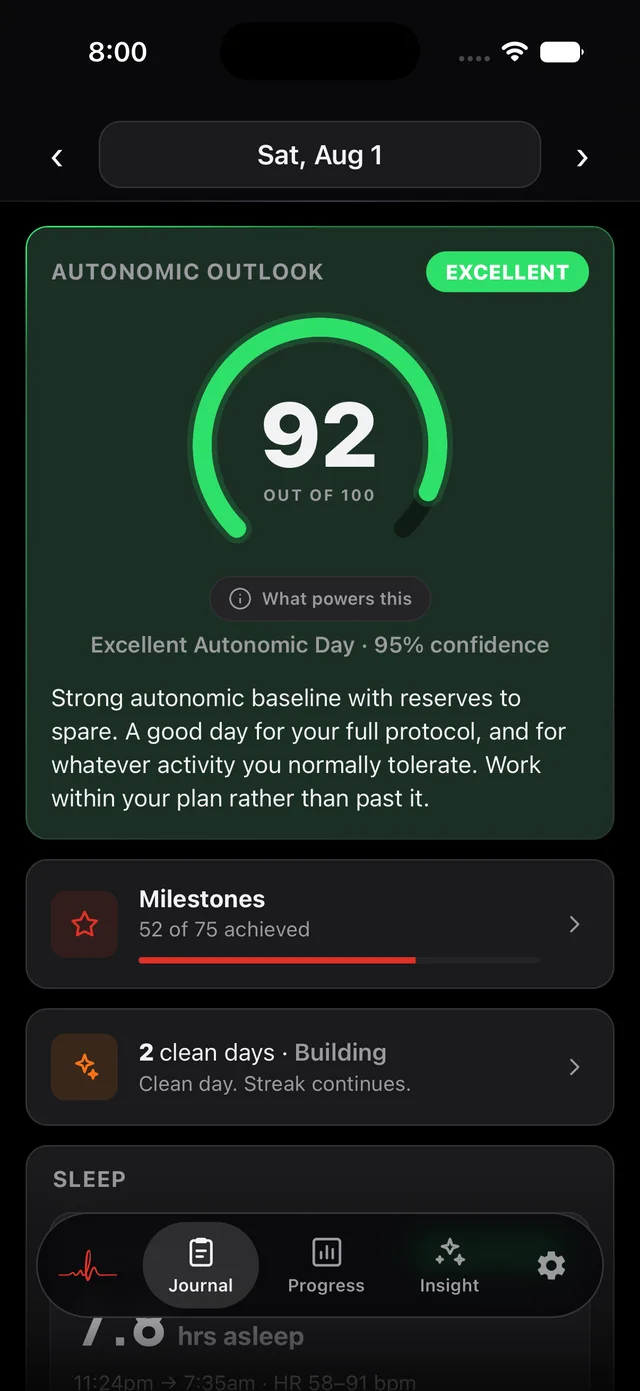
One reading becomes a score against your own normal, with a warning when things start to slide.
- What kind of day is it?A morning heart reading becomes a score out of 100, before you get out of bed.
- How much does standing cost me?A home stand test measures how far your heart rate climbs when you get up.
- What is actually helping?Insights lines up what you log with your better and worse days.


4.9 on the App Store · Free to start · Your data stays on your phone
Newest on Dysautonomia





More on Dysautonomia
Dysautonomia Awareness Month 2026: Ten Mornings, One GiveawayKnow what kind of day it is before you get out of bed.
Take a quick heart reading each morning and Autonomic gives you a score out of 100, plus a plain note on how much your body can handle today. So you can plan around a bad day instead of finding out halfway through it.