ME/CFS
Myalgic encephalomyelitis / chronic fatigue syndrome: post-exertional malaise, pacing inside your energy envelope, and how it overlaps with POTS and long COVID.
What ME/CFS actually is
ME/CFS (myalgic encephalomyelitis, or chronic fatigue syndrome) is a long-term illness whose defining feature is post-exertional malaise: effort of any kind, physical, mental or emotional, is followed by a crash out of all proportion to what you did. The crash is often delayed, so you can feel fine at the time and pay for it a day or two later.
It is far more than being tired. Sleep does not refresh you, thinking can feel like wading through mud, and standing up is often hard too, which is why it overlaps so much with POTS and long COVID. Many cases begin after a viral infection.
There is no cure yet, so the work is protecting the energy you have. Pacing, staying inside your energy envelope and resting before you feel you need to, is the foundation, and your heart rate can warn you before you overdo it.
New to ME/CFS? Read these 4 first.
In this order, they explain the crash and how to protect yourself from it.
About 33 minutes total
- 01 Post-Exertional Malaise: What Long COVID Recovery Depends OnThe crash that defines it, and why it is delayed. · 6 min
- 02 Pacing 101: How to Find and Expand Your Energy EnvelopeHow to find your limits and stay inside them. · 6 min
- 03 Why Am I So Tired? Fatigue in POTS, Long COVID, and DysautonomiaWhat is behind the exhaustion. · 11 min
- 04 Heart Rate Zones Explained: Z1 to Z5, and How to Read Them With DysautonomiaUsing heart rate as an early warning. · 10 min
ME/CFS, by what you are dealing with
Crashes, energy and pacing
5Why effort costs so much, and how to spend it carefully.
Post-Exertional Malaise: What Long COVID Recovery Depends OnPacing 101: How to Find and Expand Your Energy EnvelopeWhy Am I So Tired? Fatigue in POTS, Long COVID, and DysautonomiaHeart Rate Zones Explained: Z1 to Z5, and How to Read Them With DysautonomiaIntroducing the Pacing Budget: Know How Much Today Can TakeTreatment, research and overlap
5What is being tried, what the studies say, and what travels with it.
Low-Dose Naltrexone (LDN) for Long COVID: How It Works and What to TrackCoQ10 for Long COVID and POTS: Does It Help Fatigue and HRV?What the Latest Research Says About Long COVID & Dysautonomia (2026)POTS, Long COVID & MCAS: Why They Travel TogetherRecovery from Post-Viral Dysautonomia: Turning Data Into DecisionsPace by your own numbers, not by guesswork.
A daily energy budget fitted to you, a nudge before you go over, and a check two days later on whether it held.
- How much can I do?A pacing budget learned from what your body actually handled.
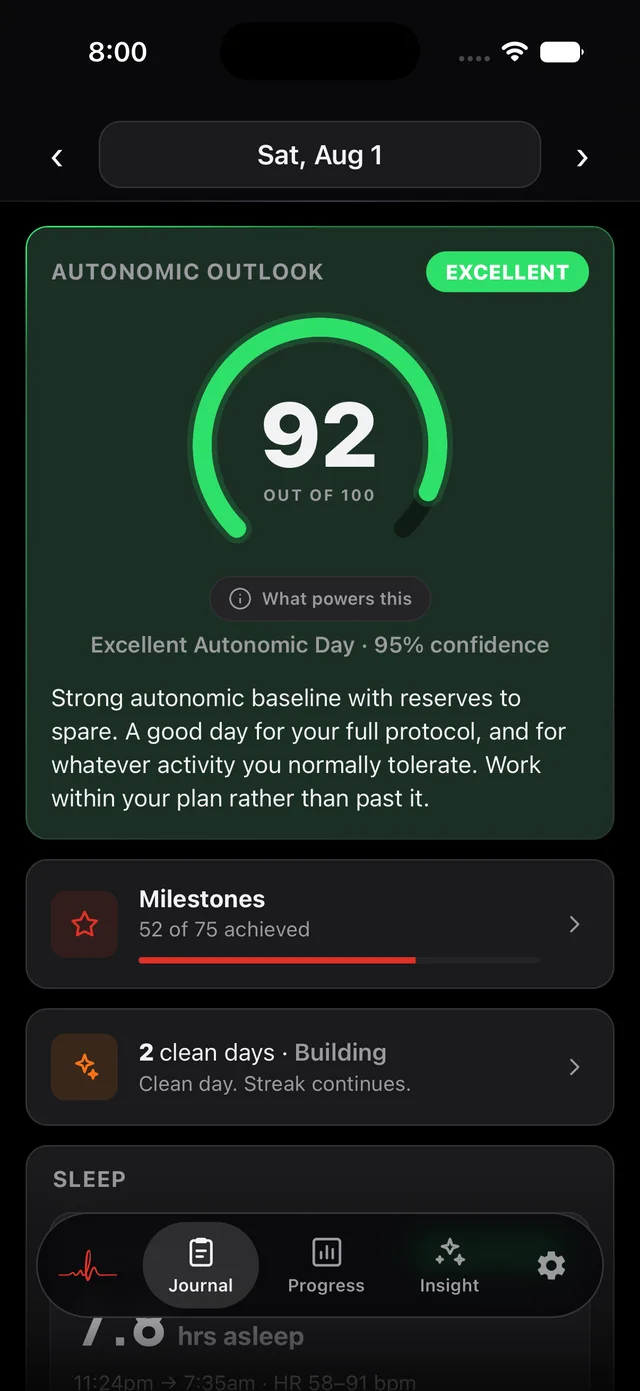
- What kind of day is it?A morning heart reading becomes a score out of 100, before you get out of bed.
- What is actually helping?Insights lines up what you log with your better and worse days.


4.9 on the App Store · Free to start · Your data stays on your phone
Newest on ME/CFS



Know what kind of day it is before you get out of bed.
Take a quick heart reading each morning and Autonomic gives you a score out of 100, plus a plain note on how much your body can handle today. So you can plan around a bad day instead of finding out halfway through it.