



Social posts for this article
Not provided.
The short answer
Feeling worse the day after a good day is usually post-exertional malaise (PEM), a delayed worsening of symptoms after effort that most often starts 12 to 48 hours later.A good day tends to be the day you do more, so the bill arrives the next day or the one after. The fix is not to avoid good days but to keep them close to your usual level, rest before you need to and plan the following day as a lighter one. If you don't have PEM, check sleep, fluids, heat and food first.
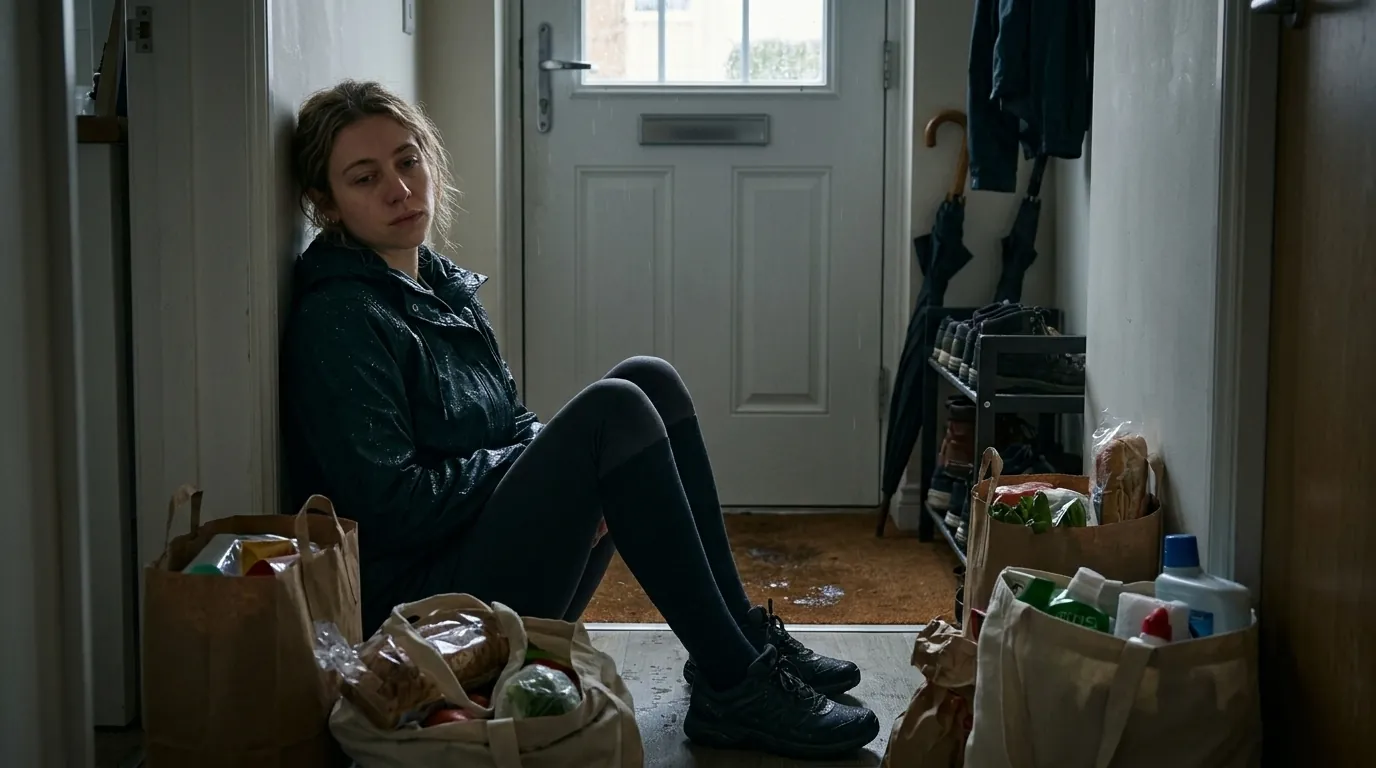
You wake up with a little more in the tank than usual. You shower, cook a real meal, maybe walk to the mailbox and back twice. It feels like progress. Then the next morning, or the one after, you can barely get out of bed. If you have long COVID or ME/CFS, feeling worse the day after a good day usually has a name: post-exertional malaise (PEM), a worsening of symptoms after effort that often arrives 12 to 48 hours later rather than on the day itself. The delay is what makes it so easy to miss and so hard to plan around.
Why does the crash come a day or two later?
PEM is a worsening of symptoms after physical, mental or emotional effort that would not have bothered you before you got sick. The UK’s NICE guideline describes symptoms that “typically worsen 12 to 48 hours after activity and last for days or even weeks, sometimes leading to a relapse,” and notes that the worsening is often delayed in onset by hours or days (NICE, 2021).
When researchers at Stanford asked 150 people with ME/CFS exactly when their PEM starts, the answers were spread out (Chu et al., 2018):
Only 11% said their PEM consistently started more than 24 hours later. But 42% said the timing varied, and counting both groups, the authors estimate that up to 37% may sometimes not feel it until a day or more after the trigger. Once it starts, it tends to stay: only 9% said their PEM routinely passed within 24 hours, and 84% said it could last a day or longer.
That combination, a delayed start and a long tail, is why the day after a good day so often feels like a bad one. By the time you feel it, the effort that caused it is a memory.
What is happening in your body?
Nobody has a complete answer yet, but two lines of research show that the body really is worse a day after effort, not just tired.
Your capacity drops on day two. In a two-day exercise test, people do a maximal cycling test, rest for 24 hours and repeat it. In a 2024 study of 84 people with ME/CFS and 71 sedentary controls, the ME/CFS group’s peak oxygen use fell on the second day (in matched pairs, from 21.7 to 20.4 ml/kg/min), and the workload they reached at their ventilatory threshold dropped from 51.2 to 46.4 watts. The controls’ small changes were not significant (Keller et al., 2024). In plain terms, yesterday’s effort left less in the tank today.
Muscles change after a crash. A Dutch study took muscle biopsies from 25 people with long COVID and 21 recovered controls a week before and one day after an exhausting cycling test (Appelman et al., 2024). All 25 patients developed PEM, with fatigue and brain fog worse one day later. Their muscles showed weaker mitochondrial function at baseline, and the activity of one mitochondrial enzyme fell after exercise only in the patients. Some also showed small areas of muscle fibre damage. The study was small and observational, so it cannot say these changes cause PEM, but they line up with the timing people describe.
Long COVID surveys find the same pattern at scale: PEM was among the most frequent symptoms after six months in a large international cohort (Davis et al., 2021).
Why is a good day so often the trigger?
Because a good day is usually the day you do more. When you finally have energy, it is natural to spend it: catch up on laundry, say yes to a visit, walk a little further to prove you can. Each thing feels manageable. The total is what your body responds to a day or two later.
This is the boom and bust cycle. A good day leads to more activity, which leads to a crash, which forces rest, which brings a little energy back, which leads to the next push. Over weeks it can leave you no further forward, or worse off, and each crash makes it harder to know what your real baseline is.
NICE’s advice is not to push through symptoms and not to use more energy than you feel you have, and to raise activity only after a period of stability, never automatically (NICE, 2021). A consensus paper on pacing in ME/CFS describes it as a way to stabilise the condition and prevent PEM, while noting the research on it is still thin (Goudsmit et al., 2012). For a fuller guide to finding where your limit sits, see Pacing 101: How to Find and Expand Your Energy Envelope.
What are the early warning signs of a crash?
Because the delay varies, catching the first signs is often more useful than counting hours. In the Stanford survey, these were the most common symptoms after physical or mental exertion (Chu et al., 2018):
| Symptom after exertion | Share who reported it |
|---|---|
| Fatigue | 94% |
| Poor concentration | 78% |
| Difficulty thinking | 74% |
| Muscle pain | 74% |
| Poor memory | 68% |
| Sleep disturbance | 67% |
| Flu-like feelings | 61% |
People often describe their own first sign more specifically: heavy limbs, a sore throat, words that won’t come, sound or light suddenly feeling too much, or sleep that doesn’t refresh. Learning yours is worth the effort, because the earlier you notice it, the sooner you can cut back.
Your numbers can move too. A 2025 preprint found that in people with long COVID, heart rate variability (HRV) stayed lower for 24 hours after an exercise test, while healthy controls showed no such dip (Ruijgt et al., 2025). In a large app-based study, mornings when someone’s HRV was lower and heart rate higher than their own usual were followed by worse crash and fatigue reports that evening, though the readings only improved the prediction a little over yesterday’s symptoms (Aitken et al., 2026). A low morning reading after a big day is a reason to go gently, not a forecast. HRV and PEM: What Your Numbers Do Before, During and After a Crash goes into the details.
Is it PEM, or just a bad day?
Not every rough day after a good one is PEM, especially if you have POTS without ME/CFS. Before you blame the activity, check the things that make any next day worse:
| Check this first | Why it matters |
|---|---|
| Sleep | A short or broken night lowers HRV and raises resting heart rate on its own. |
| Fluids and salt | With POTS, a day of doing more often means a day of drinking less. |
| Heat | Hot showers, hot weather and warm rooms widen blood vessels and worsen orthostatic symptoms. |
| Food | Large or high-carbohydrate meals can pull blood to the gut. Alcohol can do the same. |
| Your cycle | Symptoms often shift across the menstrual cycle. |
| Getting sick | A cold or other infection can feel like a crash, and can trigger one. |
PEM has a few features that point to it: it follows effort, it builds rather than eases with rest in the first few hours, it brings a cluster of symptoms (not just tiredness) and it lasts longer than the effort would explain. If your worse days follow some good days but not others, the difference is often one of the factors above. Logging both activity and these factors is how you find out; How to Find Your Triggers With a Symptom Journal shows one way to do it. If you have POTS and are unsure which advice fits you, POTS Exercise or ME/CFS Pacing: Which Advice Applies to You? walks through it.
How do you plan the day after a good day?
The goal is not to avoid good days. It is to stop each one from costing you the next three.
- Keep good days close to your usual. Treat extra energy as a buffer, not a budget to spend. Do roughly what you would on an ordinary day, and maybe one small extra.
- Decide the plan the night before. Choose what you will do before you feel good, so the energy of the morning doesn’t make the decision for you.
- Rest before you need to. Short, planned rests during the good day protect the next one more than a long rest after you are already tired.
- Make the next day light by default. Book fewer commitments for the day after anything bigger than usual, and the day after that if your crashes tend to come late.
- Watch for your first sign. If it shows up, cut back that day rather than pushing to finish.
- Use a heart rate limit as a guardrail. Staying under a personal limit can keep effort lower than it feels. What Heart Rate Should I Stay Under When Pacing? explains how people set one.
Over time, matching your activity to how you felt one and two days later is the most reliable way to learn your own delay. Autonomic’s pacing budget does that matching for you, counting what a day spent and checking the next two days for a delayed crash.
When should you see a doctor?
Talk to a clinician if crashes are getting longer, more frequent or harder to recover from, if a crash brings new symptoms, or if you have never been assessed for ME/CFS or long COVID and recognise this pattern. Get urgent care for chest pain, fainting, shortness of breath at rest or any symptom that frightens you.
The bottom line
Feeling worse the day after a good day is usually the delayed cost of doing more, not bad luck. PEM often starts 12 to 48 hours after effort and can last days. Keeping good days close to your usual level, resting early and planning a light day afterwards breaks the boom and bust cycle, and logging how you feel one and two days later teaches you your own timing. If the pattern doesn’t follow effort, check sleep, fluids, heat and food first.
Sources
- National Institute for Health and Care Excellence. Myalgic encephalomyelitis (or encephalopathy)/chronic fatigue syndrome: diagnosis and management (NG206). NICE guideline, 2021.
- Chu L, Valencia IJ, Garvert DW, Montoya JG. Deconstructing post-exertional malaise in myalgic encephalomyelitis/chronic fatigue syndrome: a patient-centered, cross-sectional survey. PLoS One, 2018.
- Keller B, Receno CN, Franconi CJ, et al. Cardiopulmonary and metabolic responses during a 2-day CPET in myalgic encephalomyelitis/chronic fatigue syndrome: translating reduced oxygen consumption to impairment status to treatment considerations. Journal of Translational Medicine, 2024.
- Appelman B, Charlton BT, Goulding RP, et al. Muscle abnormalities worsen after post-exertional malaise in long COVID. Nature Communications, 2024.
- Davis HE, Assaf GS, McCorkell L, et al. Characterizing long COVID in an international cohort: 7 months of symptoms and their impact. EClinicalMedicine, 2021.
- Goudsmit EM, Nijs J, Jason LA, Wallman KE. Pacing as a strategy to improve energy management in myalgic encephalomyelitis/chronic fatigue syndrome: a consensus document. Disability and Rehabilitation, 2012.
- Ruijgt T, Slaghekke A, Ellens A, et al. Wearable heart rate variability monitoring identifies autonomic dysfunction and thresholds for post-exertional malaise in Long COVID. medRxiv (preprint), 2025.
- Aitken A, Sawyer A, Iwasaki A, et al. Digital physiological biomarkers predict within-person symptom changes in complex chronic illness. npj Digital Medicine, 2026.
Questions people also ask about this
How long after doing too much does a PEM crash start?+
It varies. NICE describes symptoms typically worsening 12 to 48 hours after activity. In a survey of 150 people with ME/CFS, 16% said PEM started immediately, 11% said it consistently started more than 24 hours later and 42% said the timing varied. Up to 37% may sometimes not feel it until a day or more after the trigger.
How long does a delayed crash last?+
Often longer than people expect. NICE says PEM can last days or even weeks. In the same survey, only 9% said their PEM routinely passed within 24 hours, and 84% said it could last a day or more.
Can a good day cause a crash even if I felt fine at the time?+
Yes. Feeling fine during the activity is exactly what makes PEM hard to learn: the warning arrives after the effort. A good day is usually the day you walk further, stay out longer or catch up on chores, and the total is what your body responds to a day or two later.
Does feeling worse the next day always mean PEM?+
No. A bad night of sleep, too little fluid or salt, heat, a large or high-carbohydrate meal, alcohol, your menstrual cycle or an infection can all make the next day worse, especially with POTS. If the worse day doesn't follow effort, or follows it only some of the time, look at those first and log them.
What should I do the day after a good day?+
Plan it as a lighter day before it starts: fewer commitments, more rest breaks and nothing you can't cancel. If early signs show up, such as heavier fatigue, brain fog, a sore body or a higher resting heart rate, cut back further rather than pushing through.
Written by
Austin Spaeth
Austin builds Autonomic, a private, offline journal for tracking autonomic recovery. He writes about HRV, POTS, dysautonomia and post-viral illness for the people living it, turning messy day-to-day data into signals you can actually act on.