Supporting someone
For partners, parents and friends: what these conditions are, why someone can look fine and feel awful, and why "just push through" backfires.
What helps most
If someone you love has POTS, long COVID, ME/CFS or dysautonomia, one of the hardest parts is that it often does not show. They can look completely fine and feel terrible, and their routine test results can come back normal. Neither of those means it is in their head.
These illnesses also run on a delay. Doing too much on a good day can mean a crash a day or two later, which is why "just push through" or "you seemed fine yesterday" tends to backfire, however kindly it is meant.
The most useful things you can do are believe them, help them pace instead of push, and take some of the load on bad days. Recovery is usually slow and uneven, so a setback is not the same as going backwards.
Read these 4 first.
Why it is real, why pushing backfires, and how to help.
About 29 minutes total
- 01 Why Are All My Test Results Normal When I Feel This Sick?Why normal tests do not mean nothing is wrong. · 11 min
- 02 Post-Exertional Malaise: What Long COVID Recovery Depends OnWhy a good day can be followed by a crash. · 6 min
- 03 Pacing 101: How to Find and Expand Your Energy EnvelopeHow you can help them pace. · 6 min
- 04 What Recovery Actually Looks Like: The Non-Linear CurveWhat the road back tends to look like. · 6 min
Everything for the people around them
What they are dealing with
5Why it is real even when it does not show.
The Autonomic Nervous System & Dysautonomia: A Complete GuideWhy Are All My Test Results Normal When I Feel This Sick?Is It POTS or Anxiety? How to Tell Them ApartWhy Am I So Tired? Fatigue in POTS, Long COVID, and DysautonomiaPOTS in Teenagers: What Adolescent POTS Looks Like and Why It Often Gets BetterCrashes and pacing
3Why pushing backfires, and how to help them pace.
Post-Exertional Malaise: What Long COVID Recovery Depends OnPacing 101: How to Find and Expand Your Energy EnvelopePOTS Flare-Ups: What Triggers Them and How to RecoverThe long road
2What recovery looks like, from someone who has been through it.
What Recovery Actually Looks Like: The Non-Linear CurveFrom Daily Crashes to Living Again: What I Tracked, What I Changed, and What the Data ShowedSomething you can look at together.
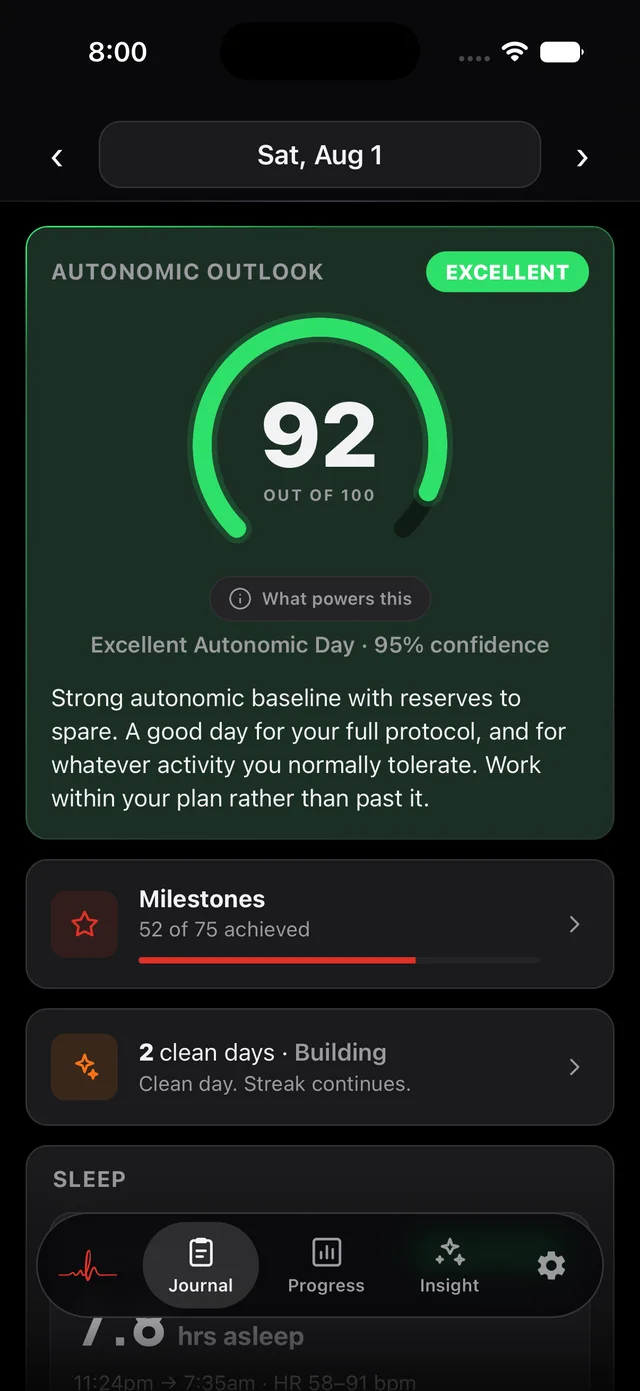
Autonomic gives the person you care about a daily score and a pacing budget, so how today is going has an answer neither of you has to guess.
- What kind of day is it?A morning heart reading becomes a score out of 100, before you get out of bed.
- How much can I do?A pacing budget learned from what your body actually handled.
- What do I tell my doctor?Turn weeks of your own numbers into a summary for your next appointment.


4.9 on the App Store · Free to start · Your data stays on your phone
Newest on Supporting someone




Know what kind of day it is before you get out of bed.
Take a quick heart reading each morning and Autonomic gives you a score out of 100, plus a plain note on how much your body can handle today. So you can plan around a bad day instead of finding out halfway through it.